I was halfway through a Sunday roast when the kitchen turned into a battlefield: the oven had gone from 350 °F to 500 °F in a blink, the roast was blistering, and my trusty skillet was suddenly a fire pit. I stared at the charred edges, my heart racing, and thought, “I could do better.” That moment sparked a culinary rebellion, a dare to create a dish that would make even the most seasoned chefs pause and say, “I dare you to taste this and not go back for seconds.”
Fast forward to today, and the kitchen smells like maple syrup, soy sauce, and a whisper of coconut milk, all dancing together in a pan. The sizzling sound of chicken thighs browning is music, while the steam curls like a fragrant cloud. My eyes catch the glimmer of the golden sauce coating each piece, and I can almost taste the sweet heat that will explode on the palate. The texture is a play of crispy skin against tender meat, and the aroma is a promise of comfort and adventure in one bite.
What makes this version stand out is that it’s not just another “maple chicken” recipe; it’s a carefully balanced symphony of flavors, textures, and techniques that elevate a humble dinner to a showstopper. I’ve stripped away the fluff, kept the ingredients honest, and added a touch of daring with a splash of coconut milk that turns the rice into a silky, creamy bed. The result? A dish that feels like a hug, with a kick that keeps you coming back for more. I’ll be honest—I ate half the batch before anyone else got to try it.
Picture yourself pulling this out of the oven, the whole kitchen smelling incredible, and the family gathering around the table with eyes wide. The sauce glistens on the chicken, the rice is fluffy and fragrant, and the green onions add a fresh, bright finish. If you've ever struggled with balancing sweet and spicy, you're not alone—and I've got the fix. This is hands down the best version you'll ever make at home, and I’m about to walk you through every single step—by the end, you'll wonder how you ever made it any other way.
Now, before we dive into the cooking, let’s talk about why this dish is a game changer. I’ve spent years testing variations, and this particular blend of maple syrup, sriracha, and coconut milk is the sweet spot that keeps the flavor profile both complex and approachable. The maple syrup isn’t just a sweetener—it’s a caramelizing agent that gives the chicken a glossy finish. The sriracha brings a punch of heat that’s adjustable to your taste. And the coconut milk? It softens the rice and adds a luxurious, nutty undertone that balances the acidity of the soy sauce. Ready? Let’s get cooking.
What Makes This Version Stand Out
- Flavor: The marriage of maple and sriracha creates a sweet-spicy sauce that coats the chicken like velvet, delivering a punch of flavor with every bite.
- Texture: The chicken develops a crisp exterior while staying juicy inside, and the coconut-infused rice turns fluffy and silky.
- Simplicity: With just nine ingredients and under 45 minutes total, you can serve a restaurant‑quality meal without a kitchen nightmare.
- Uniqueness: The use of coconut milk in the rice adds a creamy dimension that most maple chicken recipes overlook.
- Crowd Appeal: The dish balances heat and sweetness, making it a crowd pleaser for both spice lovers and those who prefer a milder taste.
- Ingredient Quality: Using bone‑in, skin‑on thighs ensures maximum flavor absorption and a juicy finish.
- Cooking Method: A quick sear followed by a gentle simmer locks in moisture and flavor.
- Make‑Ahead Potential: The sauce can be prepared in advance and frozen, allowing for a quick assembly when the day gets busy.
Inside the Ingredient List
The Flavor Base
Chicken thighs: These are the heart of the dish. Their fatty marbling absorbs the maple‑sriracha glaze, delivering a savory depth that dry cuts simply can’t match. If you skip them, the dish loses its juicy backbone.
Maple syrup: This natural sweetener caramelizes when heated, creating a glossy coating that locks in moisture. It also balances the heat from sriracha, preventing the dish from becoming overwhelmingly spicy.
Soy sauce: The umami punch from soy sauce grounds the sweetness and adds a savory layer that makes the sauce feel complete. Without it, the glaze would taste one‑dimensional.
Sriracha sauce: The fiery component of this dish. It’s adjustable—start with two tablespoons and add more if you dare. It gives that signature kick that keeps diners coming back.
The Texture Crew
Jasmine rice: This fragrant grain provides a fluffy base that soaks up the coconut milk, creating a creamy texture that’s both comforting and indulgent.
Coconut milk: It transforms ordinary rice into a velvety side dish, adding subtle tropical flavor and a silky mouthfeel.
Water: Essential for cooking the rice; it helps achieve the perfect al dente texture. Too little water makes the rice dry; too much makes it mushy.
The Final Flourish
Salt: A pinch enhances all the flavors and balances the sweetness. Be careful—over‑salting can mask the delicate maple note.
Chopped green onions: These add a fresh, bright contrast that cuts through the richness of the sauce. They’re also a visual pop, giving the dish a polished look.
Everything's prepped? Good. Let's get into the real action.
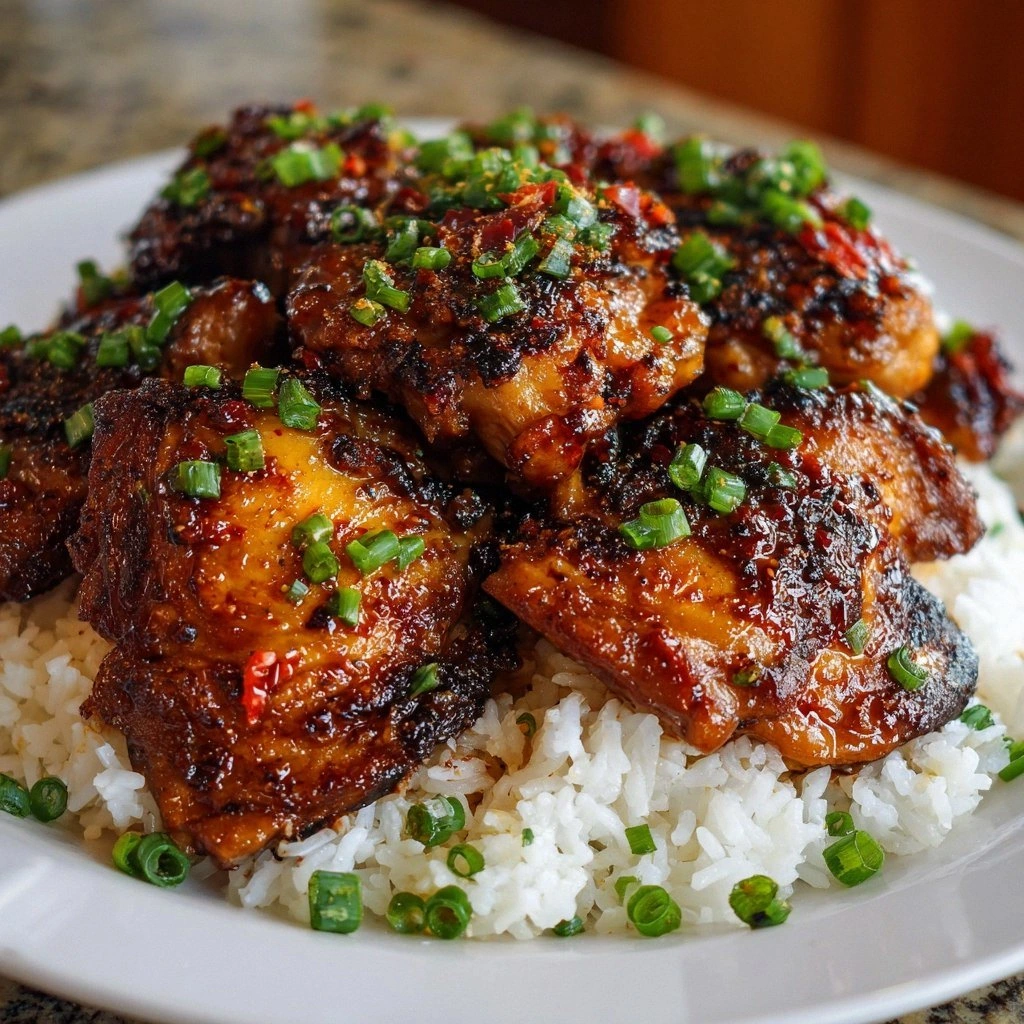
The Method — Step by Step
- Step 1: Preheat your oven to 400 °F. While it heats, pat the chicken thighs dry with paper towels. This step ensures the skin crisps up rather than steams. The sizzling sound when you place the thighs in the pan is the first hint of flavor building.
- Step 2: Season both sides of the thighs with a pinch of salt. Let them sit for 10 minutes to absorb the seasoning. This brief rest allows the salt to penetrate, enhancing the meat’s natural flavor.
- Step 3: Heat a tablespoon of oil in a cast‑iron skillet over medium‑high heat. Place the thighs skin side down and sear until golden brown, about 4–5 minutes. Flip and sear the other side for 3 minutes. The goal is a crisp, caramelized crust that locks in juices.
- Step 4: While the chicken cooks, combine maple syrup, soy sauce, and sriracha in a small bowl. Stir until the sriracha is fully integrated. This glaze will coat the chicken and become the dish’s signature flavor.
- Step 5: Brush the glaze over the seared thighs, ensuring an even coating. Then, transfer the skillet to the preheated oven. Bake for 15 minutes, letting the sauce thicken and the chicken finish cooking.
- Step 6: While the chicken is in the oven, prepare the rice. Rinse 2 cups of jasmine rice until the water runs clear. In a saucepan, combine the rinsed rice, 1 cup of coconut milk, 1 cup of water, and a pinch of salt. Bring to a boil, then reduce heat to low, cover, and simmer for 18 minutes.
- Step 7: Once the chicken is done, let it rest for 5 minutes on a cutting board. This allows the juices to redistribute, ensuring every bite is moist. Watch out: cutting into the chicken too early can cause juices to escape and leave the meat dry.
- Step 8: Slice the chicken thighs into bite‑sized pieces. Arrange them over the fluffy coconut rice, then drizzle any remaining glaze from the pan over the top.
- Step 9: Garnish with chopped green onions. Serve immediately, and watch the steam rise as the dish warms your senses.
That's it — you did it. But hold on, I've got a few more tricks that'll take this to another level. These insider tips will help you nail the texture, flavor, and presentation every time.
Insider Tricks for Flawless Results
The Temperature Rule Nobody Follows
Maintaining a steady oven temperature is key. A 10‑degree fluctuation can cause uneven cooking, leading to dry chicken or under‑cooked rice. Use an oven thermometer to check accuracy, and preheat long enough that the oven is fully stabilized before putting the skillet in.
Why Your Nose Knows Best
Before you start searing, inhale the raw ingredients. The aroma of fresh soy sauce and maple syrup signals how balanced the glaze will be. If it smells too sweet, add a dash of soy sauce; if it’s too salty, a splash of water will mellow it.
The 5‑Minute Rest That Changes Everything
Resting the chicken after baking lets the juices settle, preventing them from spilling onto the plate. This step is often skipped, but it makes the difference between a dry bite and a juicy delight. Keep the chicken covered loosely with foil during the rest to retain heat.
The Secret to Creamy Rice
The ratio of coconut milk to water is critical. Use equal parts coconut milk and water for the best balance of creaminess and fluffiness. If you prefer a richer texture, increase the coconut milk to 75% of the liquid volume.
The Quick Squeeze of Lime
A few drops of lime juice right before serving brightens the dish and cuts through the sweetness. Lime also adds a subtle citrus note that pairs beautifully with the sriracha heat.
The Finish with Sesame Seeds
A sprinkle of toasted sesame seeds adds a nutty crunch and a pop of color. They’re optional but elevate the dish from great to memorable.
Creative Twists and Variations
This recipe is a playground. Here are some of my favorite ways to switch things up:
Citrus Burst Variation
Swap half the maple syrup for fresh orange juice and add a pinch of orange zest. The citrus lifts the dish, making it bright and refreshing, ideal for summer evenings.
Smoky Chipotle Twist
Replace sriracha with chipotle sauce for a smoky depth. The heat is mellowed, and the flavor profile takes on a deeper, earthy undertone.
Herb‑Infused Version
Add chopped cilantro and a splash of lime after cooking. The herbaceous notes cut through the richness, giving the dish a fresh, garden‑like finish.
Vegetarian Reimagination
Use tofu or tempeh instead of chicken. Marinate in the maple‑sriracha glaze, then pan‑sear and bake. The result is a plant‑based dish that still delivers the same sweet‑spicy punch.
Gluten‑Free Adaptation
Replace soy sauce with tamari or coconut aminos. The flavor remains robust, and the dish stays fully gluten‑free, making it safe for those with celiac disease.
Breakfast Kick
Serve the chicken and rice over a poached egg for a protein‑packed breakfast. The runny yolk adds richness, while the maple glaze gives a sweet breakfast twist.
Storing and Bringing It Back to Life
Fridge Storage
Cool the chicken and rice to room temperature before storing. Place them separately in airtight containers; the chicken will stay juicy for up to 3 days, and the rice for 2 days. Label with the date to keep track.
Freezer Friendly
Freeze the cooked chicken and rice separately in freezer‑safe bags. They’ll keep for up to 3 months. Thaw overnight in the fridge before reheating.
Best Reheating Method
Reheat the chicken in a skillet with a splash of water to keep it moist. For the rice, add a tiny splash of water, cover, and steam over low heat for 5 minutes. The water steams the rice back to perfection.