I was halfway through a frantic week, juggling deadlines, a toddler’s tantrum, and a kitchen that had seen better days, when the craving hit me like a sudden, irresistible wave: a sweet, airy, green‑tea‑infused treat that would make my taste buds do a happy dance. I stared at the pantry, saw a bag of matcha, a tub of butter, and a handful of flour, and thought, “Why not turn this into something spectacular?” The idea was simple yet daring—turn a humble green‑tea sponge into a rolled masterpiece that would melt in your mouth and leave a lingering, earthy after‑taste that feels like a quiet meditation on a sunny afternoon.
Picture this: the kitchen light flickers as you sift the flour, the sweet scent of powdered sugar mingles with the sharp, grassy aroma of matcha, and the sound of whisking eggs is punctuated by the soft thump of a rolling pin. The batter, glossy and green, glistens under the oven light, and as it bakes, the edges lift slightly, releasing a faint, toasted aroma that makes you almost forget you’re in the middle of a culinary experiment. The first bite is a delicate balance of sweet and umami, a whisper of chocolate‑like depth from the matcha, and a silky texture that feels like velvet on your tongue. The finish is a light, almost ethereal, finish that leaves you craving more—yes, I dare you to taste this and not go back for seconds.
What sets this version apart from every other matcha roll cake you’ve seen on Pinterest or in a cookbook is the meticulous layering of flavors and textures. I’ve tweaked the ratio of matcha to flour to give the cake a vibrant color without overpowering the sweetness, and I’ve incorporated a subtle vanilla‑butter cream that lifts the cake’s airy quality. The result is a roll that is simultaneously crisp on the edges and tender inside, with a finish that’s as bright as a fresh spring morning. And the best part? The recipe is forgiving; if you’re a beginner or a seasoned baker, the techniques here will feel intuitive, yet the outcome will still feel like a culinary revelation.
Let me walk you through every single step—by the end, you’ll wonder how you ever made it any other way. From the moment you open the matcha bag to the last dusting of powdered sugar, each phase is designed to bring out the best in the ingredients, to coax the batter into a silky, elastic consistency, and to create a roll that looks as stunning as it tastes. So, roll up your sleeves, grab your whisk, and let’s dive into the green‑tea wonderland that awaits.
What Makes This Version Stand Out
- Flavor: The matcha is pure, high‑grade, and balanced with a hint of vanilla, creating a green‑tea aroma that’s both earthy and sweet.
- Texture: The batter is light and airy yet holds together, giving the roll a melt‑in‑your‑mouth feel without being soggy.
- Visual Appeal: The vibrant green hue is unmistakable, making the cake a showstopper on any dessert table.
- Simplicity: The recipe uses only ten ingredients, but each one plays a pivotal role in the final product.
- Make‑Ahead Friendly: You can roll the cake and freeze it; it will taste fresh after reheating.
- Versatility: Swap the filling for whipped cream, mascarpone, or a citrus glaze for a different twist.
- Audience: Whether you’re a novice or a seasoned baker, the instructions are clear and forgiving.
- Health Angle: Using matcha provides antioxidants, and the recipe can be tweaked to be gluten‑free or lower in sugar.
Alright, let's break down exactly what goes into this masterpiece...
Inside the Ingredient List
The Flavor Base
At the heart of this roll is the matcha powder—an ancient Japanese green tea that’s ground into a fine, vibrant green dust. Its flavor profile is slightly bitter, earthy, and subtly sweet, which is why it pairs beautifully with sugar and vanilla. If you skip matcha, you lose that signature green color and the unique umami kick that makes this cake memorable. For a richer taste, choose ceremonial‑grade matcha; if you’re on a budget, culinary‑grade will still deliver a bright flavor but with a slightly more muted hue.
The Texture Crew
The flour and baking powder work together to create the cake’s airy structure. The flour provides the base, while the baking powder introduces tiny bubbles that expand during baking, giving the roll a light, cake‑like crumb. If you use too much flour, the cake will become dense; too little and it won’t rise properly. A simple tip: sift the flour and baking powder together to ensure even distribution, preventing clumps that could ruin the batter’s smoothness.
The Unexpected Star
Unsalted butter is the unsung hero that adds richness, moisture, and a subtle caramel flavor when melted into the batter. Butter also helps the batter spread evenly, producing a thin, even sheet that’s perfect for rolling. If you’re lactose intolerant, you can replace butter with a dairy‑free alternative like coconut oil, but be aware that the flavor profile will shift slightly. A good rule of thumb: use room‑temperature butter so it melts smoothly into the mixture.
The Final Flourish
Powdered sugar is the finishing touch that gives the roll a delicate, sweet dusting, and it also adds a subtle crunch when you bite into it. The sugar dissolves quickly, leaving a clean, sweet finish that balances the matcha’s bitterness. If you’re watching your sugar intake, you can reduce the amount or replace it with a natural sweetener like monk fruit, but the texture may change slightly. Remember to dust the roll immediately after it cools; otherwise, the sugar will settle and the roll will look less polished.
Everything's prepped? Good. Let's get into the real action...
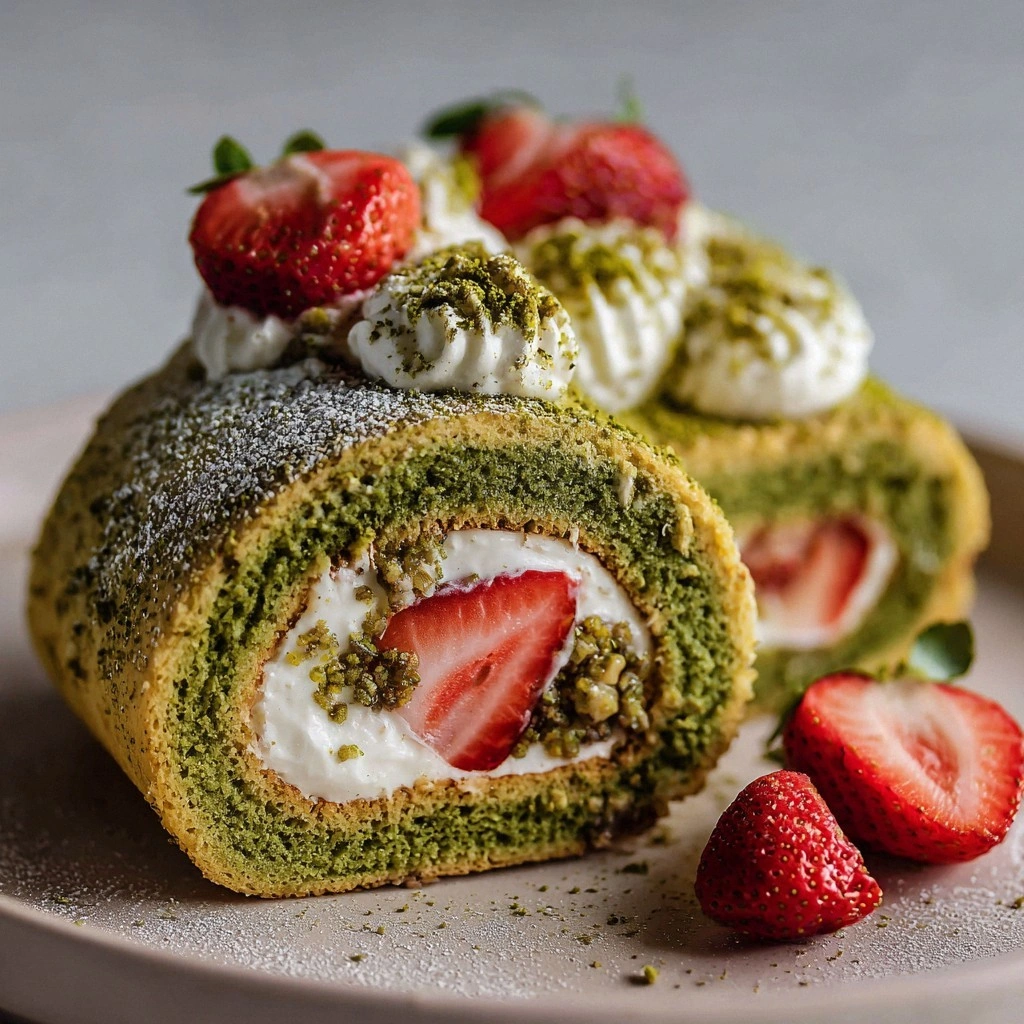
The Method — Step by Step
- Preheat your oven to 350°F (175°C) and line a 9x13 inch baking sheet with parchment paper. Grease the paper lightly with a bit of butter or spray to prevent sticking. As the oven warms, you’ll notice the faint scent of butter—an early hint of the cake’s richness. Keep a close eye on the timer; the batter will brown quickly.
- In a medium bowl, whisk together 2 cups of all‑purpose flour, 1 teaspoon of baking powder, and 1 tablespoon of matcha powder until the matcha is fully dispersed. This ensures a uniform green color and prevents clumps of powder that could make the batter uneven. A quick test: stir a spoonful; it should look like a fine, even dust.
- In a separate bowl, cream 1/2 cup of softened butter with 1 cup of granulated sugar until light and fluffy, about 3 minutes with an electric mixer on medium speed. The mixture should look pale and airy, a sign that the butter has absorbed the sugar well. This step is crucial for achieving the cake’s light crumb.
- Add 3 large eggs, one at a time, beating well after each addition. The eggs bind the batter and provide structure; skip this step, and the cake will crumble. As you whisk, you’ll hear a satisfying crackle—this is the batter coming together.
- Stir in 1 teaspoon of vanilla extract and 1/2 cup of milk, mixing until the batter is smooth. The vanilla adds depth, while the milk keeps the batter moist. If you notice any lumps, run the mixture through a fine sieve.
- Fold the dry ingredients into the wet mixture using a silicone spatula, being careful not to overmix. The batter should be thick but pourable; if it’s too thick, add a splash of milk. The key is to maintain the air pockets you created in the creaming step.
- Pour the batter onto the prepared pan, spreading it evenly with a spatula. Tap the pan gently on the counter to release any air bubbles. The batter should be a uniform, glossy green sheet.
- Bake for 25–30 minutes, or until the edges lift slightly and a toothpick inserted into the center comes out clean. The cake should have a golden‑brown edge and a fragrant, toasted aroma. Watch out for the trickiest part: if the cake starts to brown too fast, slide a sheet of parchment over the top to prevent burning.
- Let the cake cool in the pan for 5 minutes, then run a knife around the edges to loosen it. While it’s still warm, roll the cake up from the short side using the parchment paper as a guide. The warm batter will be pliable and easy to roll.
- Transfer the rolled cake onto a wire rack and let it cool completely. Once cooled, dust the roll with powdered sugar. The final dusting gives it that elegant, finished look.
That's it — you did it. But hold on, I've got a few more tricks that'll take this to another level...
Insider Tricks for Flawless Results
The Temperature Rule Nobody Follows
Many bakers bake at a higher temperature, but this recipe thrives at 350°F (175°C). Baking too hot will cause the batter to rise too quickly and then collapse, resulting in a dense roll. I’ve found that a steady 350°F gives the batter time to spread evenly and develop a beautiful, even crust. If your oven runs hot, lower the temperature by 25°F to compensate.
Why Your Nose Knows Best
As the cake bakes, the smell of toasted butter and matcha will fill the kitchen. Trust that aroma—if it smells toasty and slightly sweet, the cake is done. If it still smells raw, give it a few more minutes. A quick test: insert a toothpick into the center; if it comes out clean, you’re good.
The 5‑Minute Rest That Changes Everything
After removing the cake from the oven, let it rest for exactly 5 minutes before rolling. This brief pause allows the batter to set slightly, making it easier to roll without tearing. If you roll too soon, the batter will be too soft and will unravel, ruining the neat, elongated shape.
The Sweetness Balance
If you find the matcha too bitter, sprinkle a light dusting of powdered sugar on the surface before baking. This creates a sweet crust that counters the bitterness. Conversely, if the cake feels too sweet, reduce the sugar by 1/4 cup and increase the matcha slightly for a more pronounced flavor.
The Folding Technique
When folding the dry ingredients into the wet batter, use a gentle, circular motion. Overmixing can deflate the batter, causing a heavy, dense cake. A quick test: after folding, gently press the batter with your finger; it should spring back slowly, indicating it’s airy enough.
Creative Twists and Variations
This recipe is a playground. Here are some of my favorite ways to switch things up:
Citrus Burst
Add a tablespoon of lemon zest to the batter for a bright, tangy contrast that cuts through the sweetness. The citrus notes pair beautifully with matcha, creating a refreshing dessert.
Nutty Crunch
Fold in 1/4 cup of toasted almond or pecan pieces before rolling. The crunch adds texture and a subtle nutty flavor that complements the green tea.
Chocolate Swirl
Swirl a tablespoon of melted dark chocolate into the batter before baking for a marbled effect. The chocolate’s bittersweetness enhances the matcha’s earthiness.
Vanilla Bean Fill
After rolling, spread a thin layer of vanilla bean whipped cream between the layers before re‑rolling. This adds a silky, creamy center that melts in your mouth.
Herbal Infusion
Infuse the milk with a sprig of fresh mint before adding it to the batter. The mint adds a cool, aromatic undertone that pairs well with matcha’s subtle flavor.
Storing and Bringing It Back to Life
Fridge Storage
Wrap the cooled roll tightly in plastic wrap and store it in the refrigerator for up to 3 days. The cold environment preserves the cake’s freshness and prevents the matcha from fading.
Freezer Friendly
For longer storage, place the wrapped roll in a freezer bag and freeze for up to 2 months. When ready to serve, let it thaw at room temperature for 30 minutes.
Best Reheating Method
To revive a frozen roll, wrap it in foil and warm it in a 300°F oven for 10 minutes. Add a tiny splash of water before reheating to create steam, which keeps the cake moist and fluffy.