I still remember the night I ruined dinner so spectacularly that the smoke alarm became my kitchen soundtrack. There I stood, waving a dish towel at the detector, holding a pan of what looked like charcoal briquettes masquerading as chicken. My dinner guests were due in forty-five minutes, and I had nothing but a disaster zone and a growling stomach. In desperation, I raided my fridge, found some onions that were giving me the side-eye, a block of Gruyère I'd been saving for a special occasion, and chicken that deserved better than my previous attempt. What emerged from that chaos was this French Onion Chicken Bake — and folks, it was so good that my friends still talk about it three years later.
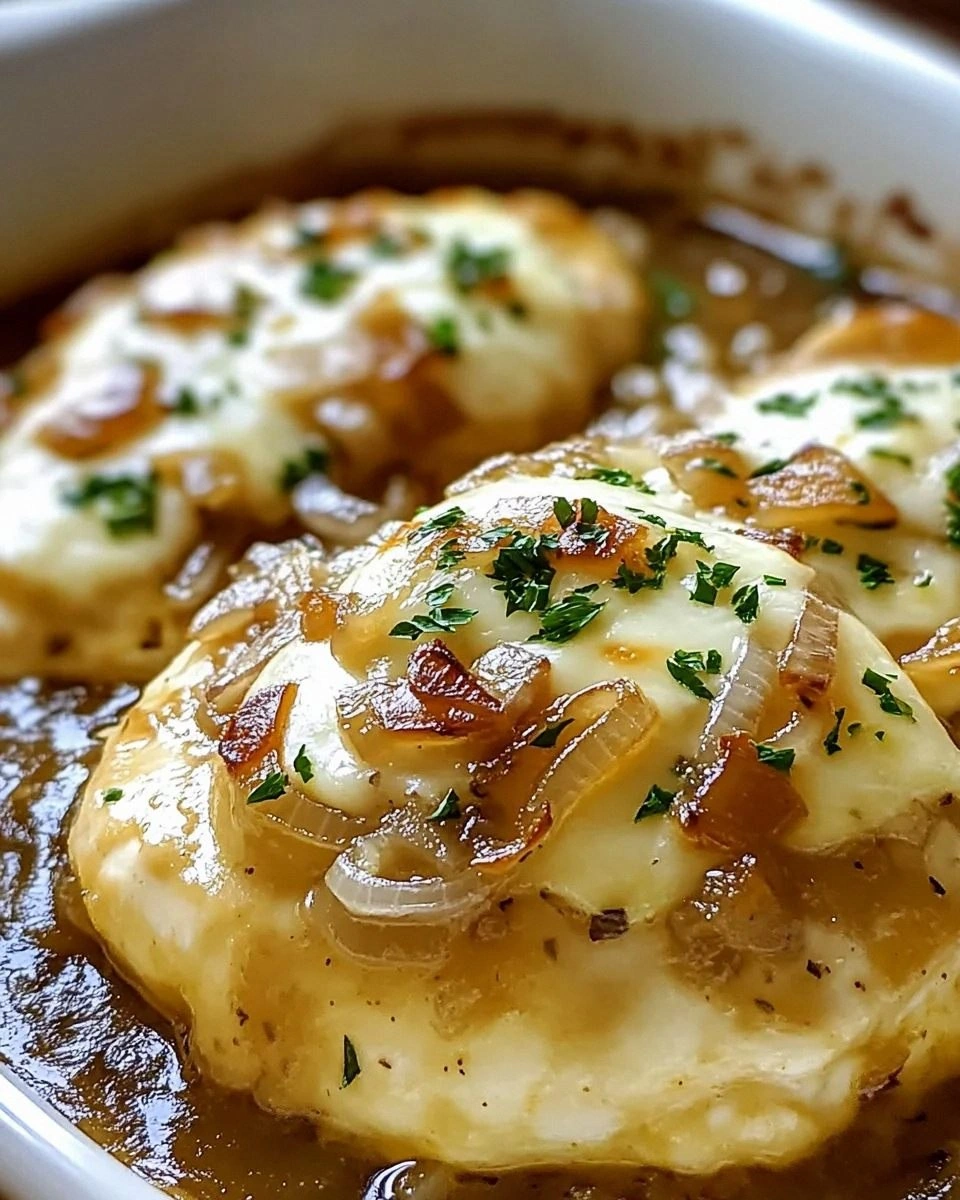
This isn't just another chicken recipe to toss into your weekly rotation. This is the dish that'll make you close your eyes involuntarily when you take the first bite, the one that transforms humble ingredients into something that tastes like it came from a cozy Parisian bistro. The magic happens when sweet, jammy onions meet golden-brown chicken, all swimming in a sauce that's basically French onion soup's richer, more sophisticated cousin. And when that blanket of bubbling cheese stretches from your fork to the casserole dish like a delicious cheese bridge? That's when you know you've arrived at comfort food nirvana.
Picture this: It's Tuesday night, you're exhausted, but you're about to create something that'll make your family think you've been secretly taking culinary classes. The aroma alone — that intoxicating blend of caramelized onions, fragrant thyme, and toasting Gruyère — will have neighbors knocking on your door with empty plates. I dare you to taste this and not go back for seconds. Actually, I double-dog dare you, because I've never seen it happen. My record stands at three helpings from my teenage nephew who claims he "doesn't even like chicken that much."
Here's the kicker that makes this version different from every other French onion chicken recipe floating around the internet: we're not just throwing everything together and hoping for the best. We're building layers of flavor like a savory lasagna of deliciousness. We're treating those onions like the divas they are, coaxing them into sweet submission. We're giving the chicken a spa treatment that ensures it stays juicy, not dry. And we're using a technique with the cheese that creates both a golden crust and a melty interior. Stay with me here — this is worth it.
What Makes This Version Stand Out
- Flavor Bomb: We're talking about onions that cook down for a full forty-five minutes until they're practically onion candy, creating a depth of flavor that'll make your taste buds do a happy dance. This isn't some rushed five-minute sauté — this is patience rewarded with pure umami gold.
- Texture Paradise: Crispy chicken edges meet silky onion gravy meets stretchy cheese pulls in every single bite. It's like a textural symphony where every instrument plays perfectly together, creating that perfect contrast that keeps you coming back for more.
- One-Pan Wonder: Everything happens in a single skillet, which means fewer dishes and more time for important things like eating and bragging about your cooking skills. The chicken gets seared, the onions get caramelized, and the whole thing goes straight into the oven in the same vessel.
- Make-Ahead Magic: You can prep this beauty up to the final baking step, then pop it in the fridge for up to two days. When you're ready to eat, just add ten minutes to the baking time and you've got dinner that tastes like you spent all day on it.
- Crowd-Pleasing Power: I've served this to picky toddlers, snobby food critics, and everyone in between. The only complaint I've ever received was that I didn't make enough. It's fancy enough for company but approachable enough for a Tuesday.
- Ingredient Integrity: We're using real Gruyère cheese here, not some rubbery substitute that tastes like plastic had a baby with sadness. Yes, it costs more, but here's the thing — good cheese melts into velvety perfection while creating those Instagram-worthy cheese pulls.
- Technique Triumph: Most recipes get this completely wrong by drowning the chicken in liquid. We're creating a concentrated flavor base that actually sticks to your chicken instead of pooling around it like a sad soup.
Alright, let's break down exactly what goes into this masterpiece. Each ingredient has a job to do, and when they all work together, it's like watching a perfectly choreographed dance — except this dance ends with you eating cheese, which is obviously superior to regular dancing.
Inside the Ingredient List
The Flavor Foundation
Let's talk about those onions — and I'm going to be dramatic here because they deserve it. We're using three large yellow onions, sliced into half-moons that'll separate into the most gorgeous strands as they cook. Yellow onions are the workhorses of the allium world, starting sharp and aggressive but transforming into sweet, mellow ribbons of pure flavor when coaxed with low heat and patience. If you substitute white onions, they'll cook faster but won't develop that deep, complex sweetness that makes this dish sing. And red onions? Save those for your salads, friend — they're too assertive here and will turn your sauce pink, which is about as appetizing as it sounds.
The chicken needs to be boneless, skinless thighs — and yes, I will fight you on this. Breasts dry out faster than my sense of humor at a corporate team-building event, while thighs stay juicy and forgiving even if you accidentally overbake them by a few minutes. Plus, they have more flavor, and at this point, we're all about maximizing flavor. Cut them into generous chunks, about two bites each, so they stay tender and don't turn into sawdust.
The Umami Boosters
Beef broth is non-negotiable here — it's what gives our sauce that rich, restaurant-quality depth that makes people ask for your secret. Chicken broth will leave you with a paler, less complex flavor that tastes like you gave up halfway through. I use low-sodium beef broth so I can control the salt level, because nobody wants to chug water all night after dinner. If you're feeling fancy, substitute half the broth with good dry white wine — it'll add brightness and cut through the richness like a food critic through a bad restaurant.
Worcestershire sauce is our secret weapon, adding layers of tangy, savory complexity that make people go "hmm, what's in this?" It's like the bass guitar in a band — you don't always notice it, but you'd miss it if it wasn't there. Just a splash transforms our sauce from good to "can I have this recipe?" status. If you don't have any, you could substitute soy sauce, but you'll lose that signature tang that makes Worcestershire so magical.
The Cheese Situation
Gruyère is the Beyoncé of cheeses in this recipe — it's expensive, it's worth it, and it makes everything better just by showing up. This Swiss beauty melts into the silkiest, nuttiest, most luxurious blanket of dairy perfection you've ever tasted. It has just enough elasticity to create those legendary cheese pulls while still being sliceable. If you absolutely can't find it, Swiss cheese will work in a pinch, but you'll lose that complex nuttiness that makes grown adults fight over the corner pieces. And please, for the love of all things delicious, don't use pre-shredded cheese — it's coated with cellulose that prevents smooth melting and will leave you with a grainy, disappointing mess.
Fresh thyme brings an herby perfume that makes everything taste like it was cooked by someone who knows what they're doing. Dried thyme tastes like dust in comparison, so please don't do that to yourself or your dinner guests. Strip those tiny leaves off the stems — it's meditative, and you can pretend you're a fancy chef prepping for a dinner party. If thyme isn't available, fresh rosemary works beautifully too, giving you a more piney, assertive flavor that stands up beautifully to all that richness.
The Unexpected Star
A touch of Dijon mustard might seem out of place here, but trust me — it adds subtle tang and helps emulsify our sauce so it coats the chicken like velvet instead of separating like a bad relationship. It's not enough to make anyone say "oh, this has mustard," but it adds complexity that makes people wonder if you went to culinary school. Smooth Dijon works better than whole grain here — we want it to disappear into the sauce, not sit on top like confused little seeds. If you're anti-mustard, you could substitute a splash of white wine vinegar, but you'll miss that certain je ne sais quoi that Dijon brings to the party.
Everything's prepped? Good. Let's get into the real action, where the magic happens and your kitchen starts smelling like you should charge admission.
The Method — Step by Step
- Start by seasoning your chicken thighs like you mean it — salt and pepper on all sides, and don't be shy about it. This is your only chance to season the meat itself, so make it count. Heat a large, oven-safe skillet over medium-high heat until a drop of water sizzles on contact, then add just enough oil to thinly coat the bottom. Sear the chicken in batches for about 3-4 minutes per side until golden-brown and beautiful. That sizzle when it hits the pan? Absolute perfection. Don't crowd the pan or you'll steam instead of sear, and nobody wants grey, sad chicken.
- Remove the chicken to a plate — don't worry if it's not cooked through yet, we're going to finish it later with all those oniony juices. Now here's where patience becomes your superpower. Reduce the heat to medium-low and add your sliced onions with a pinch of salt, stirring to scrape up all those gorgeous brown bits from the chicken. This is where flavor lives, friends. Cook those onions low and slow for about 45 minutes, stirring every 5-7 minutes, until they transform from sharp and white to sweet and mahogany-colored. Your house will smell like you've been hugged by a French grandmother.
- Okay, ready for the game-changer? Once your onions are caramelized to perfection, add minced garlic and cook for just 30 seconds — any longer and it turns bitter faster than a breakup text. Sprinkle flour over the onions and stir for a minute to coat — this helps thicken our sauce so it clings to the chicken instead of running away like a bad date. Whisk in the beef broth, Worcestershire sauce, Dijon, and thyme, then nestle your chicken back into this oniony jacuzzi. The sauce should look glossy and smell like you want to dive in face-first.
- Bring everything to a gentle simmer, then cover with a tight-fitting lid or foil. Pop it into a 375°F oven for 20 minutes — this is where the chicken finishes cooking while soaking up all that incredible flavor. Meanwhile, grate your Gruyère if you haven't already, and try not to eat half of it while you wait. I'll be honest — I ate half the batch before anyone else got to try it during my first attempt.
- This next part? Pure magic. Remove the lid, sprinkle that glorious cheese over everything, and return it to the oven uncovered for another 8-10 minutes until bubbly and golden. The cheese should be melted and starting to develop those gorgeous brown spots that taste like toasted nuts. If you want extra browning, hit it with the broiler for 2-3 minutes, but watch it like a hawk — cheese goes from perfect to burnt faster than you can say "Gruyère."
- Let it rest for 5 minutes before serving — I know it's torture, but this lets the sauce thicken and prevents you from burning your mouth like a impatient toddler. Garnish with fresh parsley for color and a pop of freshness that cuts through all that richness. Serve it straight from the skillet for maximum rustic appeal, or transfer to a pretty serving dish if you're trying to impress people who care about such things.
That's it — you did it. But hold on, I've got a few more tricks that'll take this to another level, including the temperature rule that'll change your cooking life forever.
Insider Tricks for Flawless Results
The Temperature Rule Nobody Follows
Here's the thing that separates good cooks from great ones: temperature control is everything. When you're searing chicken, your pan should be hot enough that you hear that satisfying sizzle, but not so hot that the oil starts smoking like it's trying to signal a rescue plane. I test by dropping a tiny piece of onion in — it should sizzle gently, not explode like it's angry about being there. And when you're caramelizing onions, lower heat for longer time beats higher heat every single time. Rush this step and you'll get burnt-onion bitterness that no amount of cheese can hide.
Why Your Nose Knows Best
Don't underestimate the power of your sense of smell — it's like having a built-in kitchen thermometer. When the onions are properly caramelized, they'll smell sweet and almost like French onion soup, not sharp or sulfurous. The sauce should smell rich and beefy, not thin or watery. And here's a secret: if you can't smell much of anything, your ingredients are probably too cold. Let them come to room temperature before cooking for maximum flavor development. A friend tried skipping this step once — let's just say it didn't end well, and her dinner guests ended up ordering pizza.
The 5-Minute Rest That Changes Everything
I know you're hungry, I know it smells incredible, but please — for the love of Jacques Pépin — let this dish rest before serving. Those five minutes allow the sauce to thicken and the cheese to set slightly, creating that perfect consistency that coats the chicken instead of running all over your plate like it's trying to escape. Plus, you won't burn your tongue, which means you'll actually be able to taste all those nuanced flavors you've worked so hard to develop. Cover it loosely with foil during the rest so it stays warm but doesn't continue cooking.
The Cheese Distribution Secret
Instead of just dumping all the cheese on top, try this restaurant trick: reserve a handful of cheese, sprinkle the rest evenly, then add the reserved cheese in small mounds around the surface. This creates pockets of extra-cheesy goodness and ensures every bite has that perfect cheese-to-chicken ratio. Also, grate your cheese fresh — pre-shredded cheese contains cellulose that prevents smooth melting and leaves you with a texture that's about as appealing as eating sand.
Creative Twists and Variations
This recipe is a playground. Here are some of my favorite ways to switch things up, whether you're feeding picky kids or trying to impress that foodie friend who claims they've "tried everything."
The Mushroom Lover's Dream
Add 8 ounces of sliced cremini mushrooms to the skillet after the onions have been cooking for about 20 minutes. They'll release their moisture and then caramelize alongside the onions, creating an earthy depth that makes this taste like it came from a forest bistro. Use a mix of mushrooms — shiitake, oyster, and cremini — for maximum umami impact. The mushrooms soak up all those onion juices and create little pockets of savory heaven throughout the dish.
The French-Onion-Soup-Inspired Version
Double the amount of broth and add a splash of dry sherry along with the beef broth. Serve the whole thing over thick slices of toasted baguette that have been rubbed with garlic, creating a dish that's basically French onion soup with chicken instead of just broth. Top with extra cheese and run it under the broiler until the cheese gets those gorgeous brown spots that taste like toasted nuts. This version is messy, dramatic, and absolutely worth every single napkin you'll need.
The Low-Carb Powerhouse
Serve this over cauliflower rice or zucchini noodles for all the flavor without the carbs that'll put you in a food coma. The sauce is so rich and flavorful that you won't miss the traditional starch one bit. Add extra vegetables like spinach or kale during the last 5 minutes of baking for extra nutrients and color. Even my carb-loving husband devours this version and doesn't complain about missing pasta.
The Spicy Rebel
Add a pinch of red pepper flakes when you add the garlic, or stir in a spoonful of Dijon with whole grain mustard for extra zing. If you're feeling brave, add a chopped jalapeño to the onions during the last 10 minutes of caramelizing. The spice cuts through all that richness and adds a layer of complexity that'll make people ask for your secret. My spice-loving sister adds a splash of hot sauce at the table, claiming it "wakes up all the flavors."
The Make-Ahead Meal Prep
Double the recipe and portion it into individual containers for grab-and-go lunches throughout the week. It reheats beautifully in the microwave, though the cheese won't be quite as melty. Add a tablespoon of water before reheating to steam it back to life. I've been known to eat this cold straight from the fridge when I'm feeling particularly lazy — it's that good. The flavors actually meld together overnight, making leftovers arguably better than the original.
The Holiday Showstopper
Use chicken breasts pounded thin, roll them with Gruyère and caramelized onions inside, then wrap with prosciutto before baking. This creates individual portions that look like they came from a fancy restaurant, perfect for dinner parties where you want to impress without the stress. Serve with roasted asparagus and wild rice for a meal that'll make your guests think you have a personal chef hiding in your kitchen.
Storing and Bringing It Back to Life
Fridge Storage
Let the dish cool completely before transferring to an airtight container — this prevents condensation that'll water down your sauce and create sad, soggy cheese. It'll keep for up to 4 days in the refrigerator, though honestly, it's never lasted more than 2 days in my house. Store the chicken and sauce together — the flavors continue to meld and develop, making leftovers taste like they were planned that way. If you made extra cheese topping, store that separately and add fresh when reheating for best results.
Freezer Friendly
This dish freezes beautifully for up to 3 months, making it perfect for meal prep or emergency comfort food situations. Freeze in individual portions for easy defrosting, or freeze the whole thing if you're feeding a crowd later. Wrap tightly in plastic wrap then foil to prevent freezer burn, or use freezer-safe containers. Thaw overnight in the refrigerator for best results — don't try to speed-thaw in the microwave unless you enjoy rubbery chicken. Add fresh cheese when reheating from frozen, because frozen cheese can get grainy and weird.
Best Reheating Method
The oven is your friend here — reheat covered at 325°F for about 20 minutes until heated through, then uncover and add fresh cheese for the last 5 minutes. If you're in a hurry, the microwave works, but add a splash of water and cover with a damp paper towel to create steam. Heat at 70% power in 30-second intervals, stirring between each burst. Whatever you do, don't overheat — chicken turns to sawdust faster than you can say "I should have paid attention." And here's the pro tip: add a tiny splash of water before reheating — it steams back to perfection and prevents the sauce from separating into an oily mess.